
Freya Fischer · 19 September 2026
Analyzing Log File Patterns to Identify Overlooked Opportunities in Search Engine Crawling Efficiency
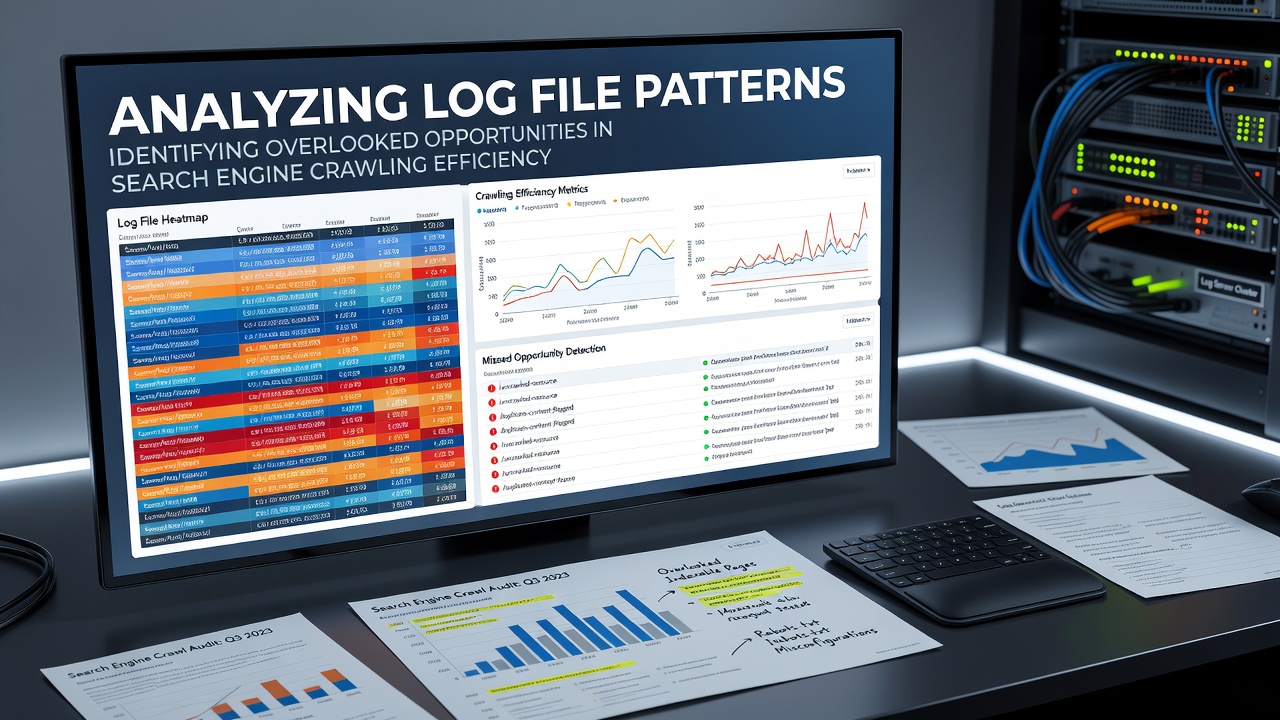
Server logs record every request that search engine bots make to a website, and patterns within those records often reveal where crawling resources go unused or misdirected. Analysts examine timestamps, user-agent strings, response codes, and requested paths to map how bots like Googlebot or Bingbot allocate their visits across directories, parameter strings, and content types. Data from these files shows repeated hits on low-value pages while high-priority sections receive sporadic attention, and such imbalances point to concrete adjustments that improve overall indexing coverage.
Core Elements in Log Data That Signal Crawling Gaps
Frequency counts per URL path form the first layer of analysis, and researchers compare these counts against sitemap entries to spot sections that bots ignore. Status code distributions add another dimension because clusters of 404 or 301 responses consume crawl budget without advancing indexing goals. Parameter-heavy URLs that trigger identical content further dilute efficiency, and log reviews isolate those query strings by grouping requests that share the same canonical target. Observers note that bots sometimes linger on JavaScript-rendered resources while skipping static XML feeds, and this behavior emerges clearly when logs are segmented by file extension and response time.
Segmentation Techniques That Surface Hidden Patterns
Time-based segmentation divides logs into hourly or daily windows, revealing whether bots concentrate activity during off-peak server hours or spread visits evenly. Path-depth analysis then tracks how many directory levels bots traverse before returning to the root, and sudden drops at certain depths indicate barriers such as robots.txt rules or authentication layers. User-agent filtering isolates individual engines so teams can contrast Googlebot behavior against other crawlers, and studies from academic sources confirm that each engine follows distinct priority rules shaped by its internal ranking signals. When logs are joined with server performance metrics, slow-loading pages correlate with reduced revisit rates, showing that response latency directly shapes future crawl allocation.
Linking Log Insights to Indexing Outcomes
Cross-referencing log entries with index coverage reports from search console tools highlights pages that receive frequent bot visits yet remain unindexed, and the mismatch usually traces to duplicate content signals or missing structured data. Conversely, pages that appear in search results without recent log activity suggest that older cached versions still satisfy ranking algorithms, freeing current crawl quota for fresher material. Researchers at institutions such as Stanford University have documented how parameter normalization in logs reduces redundant fetches by up to 30 percent in large e-commerce catalogs. Those findings align with observations from Canadian government digital service reports that emphasize consistent URL structures as a factor in sustained crawl efficiency.
Adjustments Derived from Pattern Analysis
Once patterns are quantified, teams implement targeted robots.txt updates that block low-value directories while preserving access to core content trees. Internal link architecture receives attention next, because logs show that pages with sparse inbound links attract fewer revisits even when they contain unique information. Pagination handling and faceted navigation filters are refined so that parameter combinations collapse into fewer canonical addresses, and log data after these changes confirms whether crawl distribution shifts toward higher-value sections. In September 2026 several major engines updated their rendering pipelines, and sites that had pre-adjusted their log-monitored URL sets recorded faster inclusion of new product pages compared with sites that maintained older structures.
Monitoring Cycles and Validation Methods
Continuous log collection feeds automated dashboards that flag deviations from established baselines, and weekly reviews compare pre-change and post-change distributions to measure impact. A/B testing of crawl directives occurs by applying rule variations to separate server clusters and tracking resulting bot behavior in isolated log streams. External benchmarks from W3C research archives supply reference models for expected request patterns under different site architectures, allowing analysts to contextualize their own data against industry-wide observations.
Conclusion
Log file examination converts raw request records into actionable maps of crawl resource allocation, and the patterns uncovered guide precise modifications that expand indexing reach without increasing server load. Regular analysis cycles keep these maps current as engines refine their visitation algorithms, and organizations that maintain such practices record measurable gains in content discoverability across evolving web environments.